Binary Options for Beginners and Where to Start
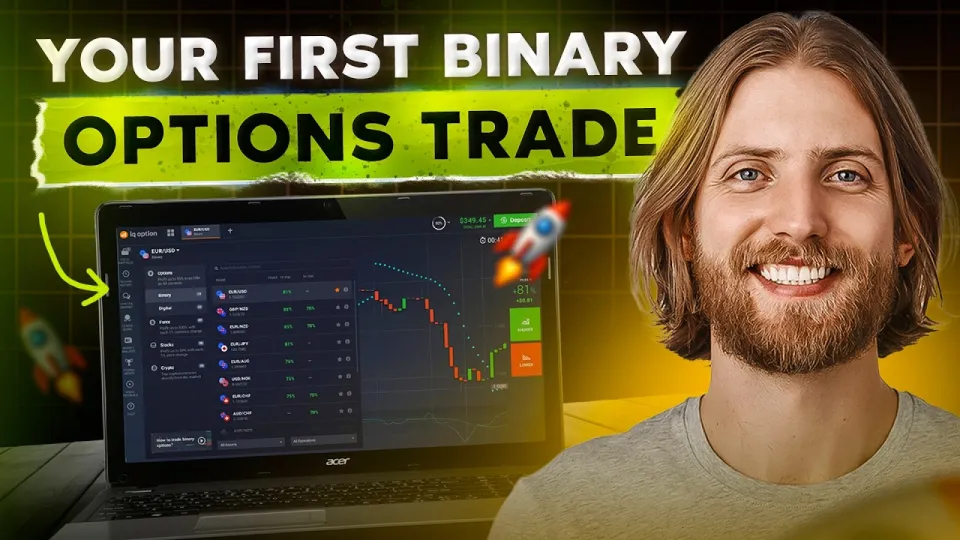
Video: Binary Options | Binary Options Tutorial for Beginners | Where Should You Start?
· based on the channel Binary options tutorial for beginners
Binary options are fixed-time contracts where you predict only the direction of an asset's price — up or down — and receive a fixed payout if you are right or lose your stake if you are wrong. For a beginner, the practical starting point is a demo account on a regulated-as-possible platform such as Quotex, a written rule for entry and exit, and a stake size small enough that a losing streak does not end the account. Everything else — indicators, expiry times, asset choice — is secondary to those three things.
What a binary option actually is
A binary option is a contract with only two outcomes: it pays or it does not. You choose an asset (currency pair, stock, commodity or crypto), an expiry time (from 30 seconds to a day or more on most platforms) and a direction. If the price is above your entry level at expiry when you bought "up", the trade pays the platform's advertised percentage, typically somewhere between 70% and 92%. If it is below, the entire stake is gone.
The asymmetry matters more than beginners expect. At an 80% payout, a $10 win returns $8 in profit, but a $10 loss costs $10. To break even you need to win roughly 56% of trades, not 50%. At a 70% payout the required win rate climbs to about 59%. That is the single most important number in binary options trading, and it is the reason a strategy that "feels right half the time" still loses money.
Expiry choice changes the game completely. Very short expiries of 30-60 seconds behave close to random and are dominated by spread and payout math; longer expiries of one hour to one day give technical analysis room to work. Most beginners do better starting at 15 minutes or longer.
Binary options tutorial for beginners: a first-week plan
A structured first week beats jumping straight into live trades. The sequence below is the one that keeps new accounts alive.
- Open a demo account and pick one asset only — EUR/USD or BTC/USD are common choices because they are liquid and well documented.
- Pick one expiry length and keep it fixed for the whole week, for example 15 minutes.
- Choose one signal rule and write it down: for instance, price crossing a 20-period moving average with RSI below 30 on the 5-minute chart.
- Log every trade with entry time, direction, result and whether you followed the rule. Fifty trades is a reasonable sample.
- Only move to real money once the demo log shows a win rate above the break-even threshold for your platform's payout.
This is the core of any binary options guide for beginners: the goal of week one is not profit, it is a documented process you can repeat.
Choosing a binary options platform
The three names most often recommended to newcomers are Quotex, Pocket Option and Binarium. All three offer browser and mobile access, demo balances, payouts in the 70-90% range and minimum stakes of around $1. They differ in asset lists, payout levels per asset and withdrawal terms, so the practical test is to register on two, compare the payout on the asset you actually intend to trade, and check the minimum withdrawal and processing time before depositing anything.
Two checks matter more than the interface. First, confirm what happens on a "tie" — a price exactly at the entry level at expiry — since policies differ between a refund and a loss. Second, read the bonus terms: deposit bonuses usually come with turnover requirements that lock withdrawals until a large volume of trades is completed. A bonus that forces you to trade more is a risk multiplier, not free money.
Regulation is the honest caveat. Binary options are banned for retail clients in the EU and restricted in several other jurisdictions, and many offshore brokers operate without a tier-one licence. That does not make trading impossible, but it does mean counterparty risk is real and the amount you leave on a platform should stay small.
Position sizing and bankroll rules
Bankroll management is the part beginners skip and the part that decides survival. A workable framework:
- Deposit only money you can lose entirely without affecting your finances.
- Risk 1-2% of the balance per trade. On a $200 deposit that is $2-$4, which fits the $1 minimum on most platforms.
- Cap daily losses at 5-10% of the balance and stop for the day when hit.
- Never increase stake size to recover a loss. Martingale-style doubling after losses is the fastest documented route to a zero balance, because five losses in a row happen roughly three times in every hundred sequences of five trades.
- Withdraw a portion of profits rather than compounding everything.
A $200 starting deposit with $2 stakes gives you 100 trades of runway — enough to gather a real sample and learn without panic.
Common beginner questions and doubts
New traders tend to ask the same few things, and the answers are unglamorous. Is binary options gambling? With random short-expiry trades, effectively yes; with a tested rule, fixed stakes and a positive expectancy, it becomes a probabilistic business with an edge, though the house payout structure always works against you. Do indicators guarantee results? No indicator predicts price; they only describe past price, and every strategy will have losing streaks.
Another recurring doubt is whether a small deposit can grow quickly. It can, but the same leverage that doubles a $50 account can erase it in an afternoon, and platforms earn from volume regardless of your result. The realistic expectation for a first month is not a profit target but a measured win rate and a clean trade log. Finally, many ask whether paid signal groups are worth it: without the ability to verify a track record independently, a signal service is an unverifiable expense, and learning to read one chart yourself is cheaper.
Platform links and tools mentioned
- Quotex — registration and trading platform
- Pocket Option — registration and trading platform
- Binarium — registration and trading platform
- NordVPN — VPN service, useful if a platform is geo-restricted in your region
Bottom line
Binary options reward discipline far more than prediction: fixed stakes of 1-2%, one asset, one expiry and one written rule tested on demo first. The payout math — around 70-92% on wins against 100% on losses — means you need a win rate near 56-59% just to break even, so treat every trade as a small probabilistic bet rather than a jackpot attempt. Start with a demo balance on Quotex, keep a log, and only scale up after the numbers justify it. The video breakdown on the Binary options tutorial for beginners channel walks through this starting sequence step by step for anyone who prefers to watch before registering.
Key takeaways
- A binary option is a fixed-time contract that pays a fixed percentage if your price direction is right and returns zero if it is wrong.
- Payouts on most retail platforms sit around 70-92% per winning trade, while a loss costs the full stake, so one loss needs roughly one and a half wins to break even.
- Three platforms are repeatedly pushed at beginners: Quotex, Pocket Option and Binarium, all accessible through a browser or mobile app.
- A realistic first deposit is money you can afford to lose entirely, and a common starting stake is 1-2% of that balance per trade.
- Demo accounts on these platforms use virtual funds and are the standard place to test a strategy before risking real money.
Questions & answers
How much money do I need to start trading binary options?
Most platforms accept a first deposit from $10-$50, but a practical starting balance is $100-$200 so that 1-2% stakes stay meaningful and you get at least 50-100 trades of experience. Only deposit money whose complete loss would not affect your finances, and test on a demo account first.
What win rate do I need to be profitable?
It depends on the payout. At an 80% payout you need roughly 56% winning trades to break even, and at 70% you need about 59%. Anything below that threshold means the strategy loses money over time regardless of how good individual trades feel.
Are the deposit bonuses on binary options platforms worth taking?
Usually not for beginners. Bonuses typically come with turnover requirements that block withdrawals until you have traded a large volume, which forces more risk onto a new account. A smaller deposit without bonus conditions keeps your money accessible.
Is binary options trading legal and regulated?
It varies by country. Binary options are banned for retail clients in the EU and restricted in several other markets, and many offshore brokers hold no tier-one licence. Check your local rules and keep only a small working balance on any platform, since counterparty risk is real.
Source: Binary Options | Binary Options Tutorial for Beginners | Where Should You Start? · Markdown version